Yet another twist has been added to the Apple mobile phone - Samsung saga. Just a couple of days ago, it was learned that the South Korea based consumer electronics manufacturer, Samsung had approached the U.S. International Trade Commission to propose the ban of Apple products in U.S., in the form of sales, imports, among others. & the battle continues... CNET, now reports that the iPad manufacturer has retorted back with a similar proposal - that of having some of Samsung's premier products banned in the U.S. As per the request forwarded to the U.S. District Court for the Northern District of California, Apple seeks that Samsung's Galaxy S 4G, Infuse 4G, Droid Charge smartphones, as also the Galaxy Tab 10.1 be banned in the U.S. Additionally, Apple also stated that it has let off Samsung's other products like the yet-to-be-released Galaxy S II smartphone and Galaxy Tab 8.9, and decided to put the axe down on only four products, mentioned above.
Showing posts with label Future Tech. Show all posts
Sunday, July 3, 2011
Tata DOCOMO Introduces Rs. 2 Per Day 'Endless Music' Plan
Mobile service provider, Tata DOCOMO, has announced the launch of its music service, today. Called Endless Music, this service by DOCOMO is a part of their attempt to boost their VAS (Value-Added Services) segment. Beginning from today, users will be able to access a wholesome bank of music, complete with categories, sub categories of music, allowing users to listen to music endlessly throughout the day. Now, get music endlessly.. Also, for a subscription charge of Rs. 2/- per day, devoid of any additional costs, the brand adds, users can download their favorite ring tones, and for a rupee extra, they would get access to download unlimited Call Me Tunes (CMTs). The service is being made available to users in both, the prepaid as well as postpaid segments. The service can also be auto renewed on a daily basis. To avail this customers will have to dial their IVR Short Code 59090, which is a toll-free number.
Labels:
Future Tech
eScan anti virus Contest Winner of the Day - FreakedOutGeek
Today's lucky winner of our eScan anti virus Win a License a Day Contest is FreakedOutGeek. FreakedOutGeek wins a copy of eScan Internet Security. FreakedOutGeek commented on the 'Apple Wants Sale of Galaxy S 4G, Galaxy Tab 10.1 and Others Banned in US' news expressing his opinion. The winner can claim the prize by contacting shayne@tech2.com. The eScan contest is on for 40 days, wherein 40 copies of eScan Internet Security Suite will be given out each day. FreakedOutGeek's post which wins him today's contest prize Participate in the daily eScan contest and you can win a copy of the eScan Internet Security suite, too. We're looking for funny, whacky, interesting comments from our readers. And remember, we're selecting winners across the board, so don't worry, if you don't win today, you could win tomorrow. Congratulations FreakedOutGeek!
Labels:
Future Tech
MTNL Launches Uniform Pay Per Second Plan in the Capital
Mahanagar Telephone Nigam Limited, or MTNL, one of the country's popular telecom services provider has now launched its latest scheme for its prepaid users. The scheme, called 'Trump 3G - All in 1 Paisa' prepaid pack for Rs. 97, currently available in the Delhi circle for MTNL's GSM subscribers, comes packed with a lifetime validity clause, as well. The tariff plan The pack also includes a Pay per Second plan that is applicable to all Local/STD/Roaming (both, Video, as well as Voice services). This plan will remain active for a period of one year from the date of activation. The new prepaid subscribers will be the ones to benefit from MTNL's uniform per second plans. MTNL, however, will roll the Pay Per Second plans for its existing users soon too. Users will be charged 1 paisa/ second for Local, STD, Roaming (details as per mentioned above), while users availing the 3G data usage services will be charged 1 paisa/ 10KB. SMS, on the other hand, would cost users 25 paisa for Local calls, 50 paise for National and Rs. 2.50 for International calls.
Labels:
Future Tech
Monday, June 27, 2011
Nokia N9 mobile phone to be the Last MeeGo Device
The Nokia N9 mobile phone has been caught in the limelight ever since it was announced. As new a revelation as this might be for Nokia fans, it might only spell doom for Nokia's MeeGo platform. From what Finnish newspaper Helsingin Sanomat has to say, Nokia's latest MeeGo smartphone, the N9, will also be their last device ever to run on their somewhat ill-fated endeavour of an operating system. It comes as a bit of a surprise because most of the Nokia loyalists around the world were probably expecting more improvements in the OS at later dates. These fas are now left wondering if Nokia will and thus seeing another option in the smartphone category. However, Stephen Elop Nokia's CEO says that there won't be any more MeeGo, no matter how well the N9 does.ns The smartphone that could not be?!? nnEarlier this year when Stephen Elop was talking about why he chose Windows Phone 7 over Android, he did not mention much about the OS which was being developed in partnership with Intel. The latter might not be too surprised as they themselves felt that Nokia was the wrong partner. Since Nokia won't be working on any development towards the platform, we wonder whether it will affect the sales of the N9 adversely. Will you still buy an N9 after this? Let us know in the comments section below.
Labels:
Future Tech
Mobile Number Portability: Port of Distress?
The much awaited mobile number portability service was rolled out in January this year after a test launch in Haryana in November last year. According to a report from TRAI (Telecom Regulatory Authority of India), by the end of February, about 38.33 lakh subscribers opted for the service. In a country with over 80 crore mobile subscribers, this is still a significant number. The service allows subscribers to change their service provider while retaining the same number. This is a big draw as many people who were dissatisfied with their service provider would previously grudgingly put up with it solely because they didn't wish to change their number. With MNP, they can easily change their service provider without having to worry about changing their number. Roadblocks While the process seems quite simple, the execution is not without obstacles. People who have tried to port have faced a number of issues, leaving them in a lurch. Take, for instance, the case of Rajiv Patel, who ported from BSNL to Tata Indicom. He says, "I was not satisfied with BSNL mainly because of poor network. As I run a wholesale business, I didn't want to change by number. So when MNP was launched, I decided to shift to Tata Indicom. Everything went fine; I even received the SMS informing me of the time and date when my number would be activated on Tata Indicom. But when that day arrived, I discovered that BSNL deactivated my number in the morning itself and there was nothing I could do but wait for Tata Indicom to activate my number. Thankfully, my number was activated sometime late in the night. However, the people who tried calling my number couldn't reach me and were informed that this BSNL number has been temporarily disconnected. This continued for a week or two and finally after complaining, my issue was resolved. All in all, it was a nightmarish experience and I even lost some business as people could not reach me." Rajiv is not alone, as there many who faced similar predicament. Funnily enough, a few others found that their number was active on both service providers. Aditya Soni, who had a Reliance connection ported to Vodafone realized that his number was active in both places. The entire porting process in itself went smoothly other than this minor glitch, which he says went on for about a week. On the other hand, many users found their MNP request rejected due to various reasons, the most common being that they were part of special group plans. Another common ground for rejection was outstanding payment due at the existing provider. While the scenario looks chaotic, not everyone faced issues with the porting process. Prateek Chakraverty, who had a BSNL connection and switched to Vodafone, says, "I had a BSNL connection and, as you can imagine, the network quality was pretty lousy. Hence, I decided to move to a private player. The MNP process for me took about 10 calendar days (8 business days). But, of course, it depends on the old network operator. If they choose to delay the process, it might take a while, which is 14-21 business days. There would be a "no service" window for about one hour before your number is ported to the new network operator, about which you will be informed well in advance." Is it worth the hassle? Or is it Hassle-Free Freebies With MNP, the power is finally in the hands of the consumer. If they are not satisfied with the service, talk plans, network, etc., they can switch to a different service without having to worry about changing numbers. On the other hand, in this highly competitive market, the service providers are tripping over each other to come up with exciting offers in a bid to retain their customers and woo others. While some have waived off the Rs 19 MNP fees, others are offering free talk time, free SMS, and even a free SIM card. But nothing beats the free pizza offer! Many users simply sent the SMS without ever intending to switch services, just for the free pizza. Where to Lodge Complaints? Almost all the service providers have set up dedicated helplines for MNP, but the experience is similar to calling up their regular helpline. It's no guarantee that you will be able to get through, and if you do, you'll probably be put on hold while the executive tries to figure out what's wrong. Seven out of ten times, you will be asked to go to the customer care outlets, where you have submitted your documents. Most of the issues should get resolved at this stage. If not, you can approach the nodal officer of your service provider with the docket number of your complaint. You will find the contact details of the nodal officer on your service provider's website or the TRAI website. As with anything new, there are teething problems that have come to light and TRAI, along with the major players, is keeping an eye on the situation and making amendments wherever required. Things to keep in mind before porting Porting can be done in the same service area only. Mobile numbers cannot be retained for another city. There should be no outstanding payment with your existing service provider. Maximum porting time is 7 days in most parts of the country, except for Jammu & Kashmir. Disruption time while switching off service providers cannot exceed two hours and happens during the night. You will have to wait for a period of 90 days before you can switch again. For more information on Number Portability check out our earlier feature here.
Labels:
Future Tech
Apple Launches Unlocked iPhone 3GS for Rs. 19,990 mobile phone
The iPhone 3GS was available quite a while back through network operators like Vodafone and Airtel. But then, these devices were not unlocked and users were tied down to those particular subscribers if they had to use their iPhones. However it looks like Apple is enticing more people to buy their smartphones by announcing the factory unlocked version at a very reasonable price of Rs. 19,990. At an alluring price?!? nnAccording to BGR, the iPhone 3GS will be offered by Airtel and Aircel for now, probably others will follow suit after some time. But what's cool is that you can change operators as and when you wish and keep the handset with you. It's quite obvious that many will crib about India being Apple's favourite dumping ground and that we only get old products etc. But on the brighter side, there are many out there who would wish to own an iPhone but are put off by the exorbitant pricing. This initiative can possibly attract more people to Apple's products. Of course, you'll be missing out on a few features like Facetime, but you can't have everything, right? We'll take a quick look at the iPhone 3GS' specifications now. 3.5-inch Capacitive touchscreen with 320 x 480 pixels 3G, Wi-Fi, GPS with A-GPS support EDGE/GPRS Bluetooth 2.1 with A2DP, headset support only 3.15 megapixel camera with autofocus 3.5 mm audio jack 256 MB RAM 8/16/32 GB Capacities 600 MHz ARM Cortex processor So now that you have an unlocked version of the iPhone 3GS coming in at Rs. 19,990, are you willing to take the plunge?
Labels:
Future Tech
Skype Posts then Pulls Video of Upcoming iPad App
Skype is set to launch an app for the iPad, next Tuesday and the company seems to have accidentally put up a video of its app on YouTube. It's "accidental" because they changed its setting to private as soon as they realized people had watched it. The video is no longer viewable on Skype's YouTube channel but a Razorianfly reader (http://www.razorianfly.com/2011/06/24/skype-for-ipad-video/) managed to capture video of the video and put it up on their YouTube channel. The video is embedded below. (http://www.youtube.com/watch?v=B5G_CkPfDOU) Skype's coming for iPad on Tuesday Skype's had an iPhone app since March 2009, but only allowed video capability on it this year (when it made sense to because the iPhone finally had a front facing camera). Skype didn't make an app for the iPad yet because of the same front facing camera reason. And now it's competing with FaceTime for both devices. The obvious advantage that Skype currently has over FaceTime is that it works over both, 3G and Wi-Fi, however that may change as soon as Apple opens up FaceTime to 3G. The other obvious advantage is that FaceTime is Apple to Apple only, however a Windows desktop user can call someone on an iPad using Skype. The video call set up is the same, two windows, the bigger one of the user you're on a call with and a smaller one of you. It also has integrated phone dialling and text chat abilities.
Labels:
Future Tech
Onida Launches NexS HD Media Player
Entering an already crowded media player market is Onida's latest NexS HD media player. This little box capable of Full HD output is priced at Rs.6,490, which makes it a competitor to the WD TV Live. It supports all popular HD video formats (nothing specific is mentioned on their site) and features networking capabilities as well. The player is available now in all major cities across India. Small and Compact The Onida NexS comes with two USB 2.0 ports that support pen drives, as well as portable hard drives. The player also has Samba built-in making it easier to share the media files over your home network. The NexS only has wired connectivity but it should be possible to use a Wi-Fi dongle in one of the USB ports just like the WD TV Live. While it supports 1080p, Onida haven't mentioned which formats are supported by the player. We'll know soon enough though once we do a full review of the NexS, so stay tuned.
Labels:
Future Tech
Massive Restructuring in Bharti Airtel to Cost 2,000 Jobs
Popular Indian mobile service provider, Bharti Airtel is gearing up for a restructuring process on a massive scale, its biggest since 2008 - the period of recession. As a part of the restructuring exercise, Airtel is looking at the merger of three of its separate businesses, i.e. its mobile, satellite TV (DTH), and fixed-line and broadband telemedia business, totally amounting to over 90 per cent of Airtel's revenues. Only this merger will mean the ouster of 2,000 of its employees to be able to get in the others within a single, definite bracket. Downsizing.. It is largely being spoken about that the popular Indian mobile service provider is not doing too well, at least as far as the figures that it has been posting on the wall is concerned. So, at a time when restructuring is considered, Airtel also looks at cost-cutting, in order to boost profits. All these factors, understandably so, leaves the sword hanging on the fate of 2,000-odd employees at Airtel. The downsizing of workforce is also happening on micro-levels, as several executives have been asked to cut down the sizes of their teams. Owing to the recent changes that have taken place in the Indian mobile market, especially with respect to the tariff prices among others, have been giving these brands sleepless nights. Now, with Airtel making a big move as this, other operators may follow suit, too. Source: The Times of India
Labels:
Future Tech
HTC mobile phone Desire to Get Stock Gingerbread in Australia
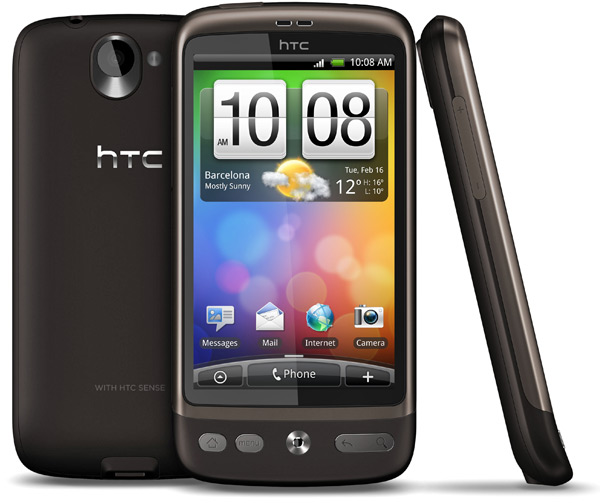
There was quite a commotion over the HTC mobile phone Desire not getting a Gingerbread update and due to that; HTC finally announced that they will do so. How will they do it, or what will they have to sacrifice for bringing Gingerbread has not been mentioned as of now. But apparently Telstra, an Australian service provider is deciding to exclude HTC's Sense UI completely to make space for Gingerbread. Gingerbread makes more Sense! That definitely sounds like a good idea, because HTC Desire users will get Gingerbread goodness out of the box. However, that's a step which Telstra will take and we are yet to know how many other countries will actually bring the Gingerbread update for the HTC Desire smartphones. The HTC Sense UI in itself is one of the few interface options that actually work well and are easy to use. But even then, using Gingerbread out of the box can be a lot better than running most UIs on a smartphone. Guess we'll have to play the waiting game and hope that users around the world will get the best of both (or, maybe one) worlds. via Engadget
Labels:
Future Tech
Spice mobile phone Mi-410 Gingerbread Build Rooted!
We had reported earlier about the Spice mobile phone Mi-410 receiving an unofficial Gingerbread update. Naturally, updating the phone to a stock 2.3.4 Gingerbread will rob you of your Superuser privileges. If you are somewhat of a control freak and were a bit iffy about jumping to 2.3.4, then we have some good news for you. Bang for Buck Now, Free Radical, a member of Erodov forums has found a way to root your Mi-410 running on the latest version of Android. This currently doesn't work on a Windows based machine, you will need a Linux distro with Nautilus to get this working. You can find a step-by-step guide here. (Note: If the link dosen't work, try again later). This rebranded Huawei Ideos X6 packs in quite a punch for its price tag and is sure to give other Android phones from bigger brands a run for their money. If Spice continues to churn out phones like these, they may just be the next big thing to look out for in the mid to high end mobile phone space.
Labels:
Future Tech
Sunday, June 19, 2011
BenQ EW2430V full HD LCD monitor - A Pleasant Surprise
BenQ has in recent times become very popular for their monitors as they have a range of affordable offerings for gamers and mainstream desktop users alike. Their 2420HD models from the G and E series have been extremely popular amongst gamers in particular. They've launched their new 24-inch EW2430V model in the market and that's what we'll be reviewing today. nnFeatures For a long time now, customers have been using TN panels. They're cheaper and have a good response time, but they lack sorely in colour reproduction. The BenQ monitor uses a VA panel that's lit up using LEDs. The monitor is based on a full HD 1920x1080 resolution panel. Being a VA panel, BenQ claims that the response time is 8ms. Most TN panel displays are advertised with having a response time of under 5ms in comparison. How much it really affects the performance is something we'll look at when we get to the performance testing. USB port hub built into the display The display also comes with a pair of built-in speakers and plenty of connectivity options. The standard D-Sub, DVI and audio ports input/output are available. There are two HDMI ports, which should be handy if you have multiple sources that require HDMI such as DTH services and gaming consoles. There's also component connectors for video and audio. The display also has a built-in USB hub - there are four ports in all. The user interface on the display is similar to most of the BenQ models we've seen in the past. There are a decent number of controls, but it is no way comparable to a professional graphics monitor. Thankfully, the display performs satisfactorily out of the box, so very few changes are actually required. nnDesign and Build Quality The BenQ EW2430V is a solid monitor and it's evident from the weight of the package. The stand is solid and heavy. Attaching it to the display is very simple as well - it's just a matter of tightening a screw. The stand isn't flexible and only allows for minimal movement. A solid stand - mix of style and functionality The design of the display is great. The display has black bezel whereas the lower panel and the staff have a silver coloured finish to it. The only button visible from the front is the power button. All of the display controls are hidden at the back of the monitor with controls clearly marked at the front. This makes it a little inconvenient to use. Thankfully, you'll only have to use those controls occasionally. pagebreak nnPerformance We used DisplayMate to test the monitors. We used displays in a cloned setup to test the EW2430V. Our first observation while tweaking the display was that there were plenty of controls to calibrate the monitor. The monitor has brightness and contrast controls that react well to the controls. One thing that's clear from the very beginning is the good contrast ratios. The black levels are pretty good for an LCD panel. Once calibrated, the brightness seems a little low. Users can choose to up the brightness to their liking but we decided to use somewhat lower brightness levels during the test. Colours in general, look a little undersaturated but, closer to reality. In comparison to the more expensive ASUS PA246Q, it looks less vibrant. Through the Displaymate test, we found the various shades of grey to be normal. There was a clear difference between each of the grey clocks. There was tint of any colour and the grey looked normal. While running through tests where text is placed on bright colours, we found yellow to be not very readable against a white background. Minimal controls visible in the front Overall, contrast levels are very satisfactory. There are fine backlighting issues and viewing angles don't appear great when the lights are turned off. While viewed sideways in a dark room, the screen appears brighter and it loses detail. Otherwise, it's way better than most TN panels. Although less saturated, colours look very normal. Blues to black transition isn't as good as the colours, but only slightly. The under-emphasised colours has its upside, skin tones look more natural. Image quality in general is soft and darker scenes don't show much detail due to highlights not being seen as clearly as with brighter displays. nnVerdict We are pretty impressed by the performance of the BenQ EW2430V and also its feature set. With a whole bunch of connectivity options and a great solid design, it makes a good display for an entertainment PC. VA panels for mainstream usage Priced at Rs. 17,200, it's a good price for a VA panel monitor. It's not the cheapest LCD monitor, but at the same time, it's not as expensive, as some of the professional class of monitors. This in our opinion, is one of the better panels to buy if you have a budget for it.
Labels:
Future Tech
ZOTAC GeForce GT 520 graphics cards: Nothing Special
In the world of graphics cards, one often tends to ignore the little ones and for good reason, I suppose. Most of the entry level graphics cards are too weak to handle even casual games. On paper they may be very appealing compared to the onboard graphics chip, but that never translates into any real world advantage. Which is why when Nvidia released the GT 520, it went almost unnoticed and we got to know about it once ZOTAC sent their sample for review. Design and Features The card is based on Nvidia's new GF119 core which is yet another Fermi derivative with a highly crippled configuration. The GT 520 has just 48 shader units and a 64-bit memory bus which is very weak, but not unusual for a card in this price bracket. For reasons unknown, Nvidia have decided to go with a whole gig (1GB) of GDDR3 memory which makes no sense at all. Perfect for HTPC users ZOTAC is offering two versions, the standard one (that we are testing) and a Zone edition which is a passively cooled card. There's nothing exciting to talk about here, it's puny little thing that occupies a single slot in the system making it a viable candidate for an HTPC. The core is clocked at 810MHz while the memory runs at 1600MHz (effective). Due to its low profile nature, you don't need a high wattage PSU, any run-of-the-mill 300W PSU would do fine. Plenty of connectivity The ports include VGA, HDMI and DVI. There isn't any HDMI cable bundled, possibly to keep the costs down. ZOTAC have also included extra brackets for the ports incase you wish to separate the VGA port and use it in a different slot. A small orange fan helps cool the aluminum heatsink that covers the core and the memory chips. That's pretty much it really; let's see how this fares against AMD's lineup particularly the XFX HD6450 we recently reviewed. Test Rig Specifications • Processor: Intel Core i7-2600K CPU @ 3.40 GHz • Motherboard: GIGABYTE P67A-UD3R • Memory: Corsair Dominator GT 6 GB DDR3 (3 x 2 GB) • Hard drive: WD Velociraptor 300 GB • GPU: ZOTAC GT 520 • PSU: Cooler Master Silent Pro 1000W • VGA Driver : 275.33 Performance The ZOTAC GT 520 and the XFX HD 6450 perform more or less the same. I ran all the games at a 1680x1050 resolution and disabled any AA or AF, the rest of the settings was untouched. I wasn't able to get the Left 4 Dead 2 score due to random freezing issues but I'll try and add that score once I get it sorted out. Temperature and Noise Using FurMark to gauge the temperature, we got a idle temp of 41C and when stressed, it shot up to 63C. The tiny fan does a decent job of keeping the temperatures in check and isn't very noisy either. Verdict Too weak for gaming and a bit expensive for an HTPC card The MRP of the ZOTAC GT 520 is Rs.3,699, but end users can find it in stores for Rs.3,400. Judging by the performance and features, we'd have to pick the XFX HD 6450 over the GT 520. AMD's offering is practically identical to the GT 520 in terms of design and features and costs a lot less as well at just Rs.2,500. The card also has a passive cooler so it's quieter and you have the option for Eyefinity. Nvidia's GT 520 doesn't bring anything new to an already crowded entry level segment. There are many other cards that offer the same features and performance at a much lower price so if you're looking for a good HTPC card then I'd recommend the HD 6450 over the GT 520. If you want to do a bit of gaming, as well then the HD 6570 is your best bet for a couple hundered more.
Labels:
Future Tech
Saturday, June 18, 2011
ASUS PA246Q monitor - Caters to a Different Audience
ASUS is known best for its PC components and peripherals, and have also ventured into other areas such as notebooks and tablets. Their share in the PC displays is small in comparison to Samsung and Viewsonic, but there are a few models that catch our eye. The new ASUS PA246Q is one of them. This new display belongs to the ProArt series that specifically caters to the professional graphics designer users. Stand and monitor are bulky in design Design and Build Quality The ASUS PA246Q has used a 24.1-inch, 1920 x 1200 panel on this monitor as opposed to the trend in monitors seen nowadays with many models having the 1920 x 1080 resolution displays with the 16:9 aspect ratio. The PA246Q has a swivel feature which allows the screen to be rotated into a portrait layout. The monitor has a black finish with the ASUS branding in silver. To add a little style to it, ASUS have added a thin red stripe on the bezel below the screen. The controls for the display are all located at the bottom right of the monitor. There are grid markings on all sides of the screen for previewing print formats. The back of the monitor has a lot of square shaped vents for cooling. Monitor can be swiveled to face in portrait mode The display has a bunch of connectivity options which include HDMI, DisplayPort, DVI-D, VGA, a proprietary USB port and a 3.5mm audio jack for connecting headphones. All these ports are located at the back. There are two USB ports as well as a memory card reader to the left of the monitor. The stand of this monitor like the display is quite bulky in design. The base of the stand has a swivel functionality. The stand can be raised vertically to allow the monitor to be used in portrait mode. Overall the design of the ASUS PA246Q is average, but it is very sturdy. ASUS could have worked a little more on the physical looks of this monitor to give it a classier feel. Features The ASUS PA246Q uses a 24.1-inch panel on this monitor. The panel used for this monitor is the new P-IPS, which is the short form for professional in-plane switching panel. Using FRC, the monitor is able to simulate 10-bit colours. This display features built-in USB hub with two ports and a 7-in-one card reader. The larger aspect ratio means you get more workspace and resolution. Going from 1920x1080 to 1920x1200 is a fairly big leap. The screen can be adjusted to an aspect ratio of 16:9, but one will notice black bands at the top and bottom. Quickfit and display controls available on the bottom right The onscreen display on the PA246Q is simple to use after you get used to it. In the beginning, it's overwhelming with the number of options and controls. For example, there are a ton of colour controls to handle everything from the saturation levels to the hues. There are ready profiles for sRGB and Adobe RGB modes, as well as the usual colour presets that users can switch to. Apart from the Standard mode, the User mode allows tweaking of all of the display's parameters. This is useful while calibrating the monitor. There's also the QuickFit feature which allows users to get a preview of how their work will appear on print, on an A4 sized paper for example. pagebreak Performance The PA246Q was a more impressive monitor when it came to colours and clarity. We found the brightness levels to be very high. Despite our effort to reduce brightness, we weren't able to bring it down to a really low level. During the test, we ran the screen at a brightness of 10 per cent and it was still way brighter than all of the other screens. 7 in one memory card reader and USB connectors on the left of the monitor One of the anomalies we noticed in the grey gradient test was the slight green tinge. Another thing that we noticed was that some colours such as red and green were over-emphasised. They appeared more fluorescent than normal. The other colours looked more natural. The black levels on the screen weren't excellent. For example, the other display we reviewed recently, the BenQ EW2430V had visibly better contrast levels. The backlighting, however was very even. Viewing angles were good, too. Rear connectors for HDMI, DVI, VGA and others The same characteristic behavior that we noticed on the BenQ display was visible on this display. In the 64 step intensity chart, we noticed blue transitioning into black sooner than the other colours. Still, this was way better than most TN panels we've tested in the past. Skin tones seem enhanced as with all colours on the display. The display looked a little sharper and clearer because of the extra bright levels. Darker scenes take advantage of this and look clearer, but colours are definitely not natural. Vibrant Colours on this ProArt Series monitor Verdict The ASUS PA246Q is aimed at a completely different audience. It's made for the graphics designers fraternity. The PA246Q is in many ways impressive. It renders colours beautifully, but not necessarily, accurate. The PA246Q has a wide variety of controls that allow you to calibrate it perfectly. Anyone buying this monitor should buy a calibration unit as this isn't a monitor you use straight out of the box. Priced at Rs. 31,000, it's way more expensive than most other 24-inch displays, as well. For a slightly larger sum, you could buy a 27-inch display that supports a resolution of 2560x1440.
Labels:
Future Tech
Sony's S1 and S2 Tablets Featured in a New Teaser Video
Looks like Sony is leaving nothing to chance with their upcoming tablets and have released a first in a series of videos for the S1 and S2 tablets. The first video tagged "The First Impression" is a little misleading, since we can't really get a good look at the tablets themselves. The video is beautifully done though with the whole domino effect going on. I really like the way they've used the lighting and placement of power lines and trees to create a cool shadow effect. Towards the end you'll notice both the tablets running Honeycomb but that's about it. We've covered the announcement of the S1 and S2, back in April itself in depth, so you can take a look here for more information. Most likely, the features and specifications shouldn't change much, but we'll know soon enough. For now, enjoy the video.
Labels:
Future Tech
Facebook's Project Spartan to Take Down Apple on iOS Itself
Facebook's up to a lot of mischief. First, it's planning its own photo sharing app, then it's planning a special iPad app, now it's got Project Spartan. Project Spartan is one of Facebook's more "take 'er down" projects. It's the name of a new platform Facebook is said to be developing. This platform is entirely HTML5 based and it aimed to hit 100 million users in a key area i.e. mobile. This platform will work exclusively on iOS (iPhones, iPod Touches and iPads) but won't be sold through the App Store. Instead, it will work through the mobile browser aka Safari. Facebook wants to cut Apple's strict app process This very clearly looks like a Facebook versus Apple fight. Facebook seems to want to teach Apple a lesson for being so stringent with the way it sells apps through its App Store. Facebook's hired the help of about 80 outside developers for Project Spartan. A lot of these outside developers are working of apps to work in the platform like news reading apps and game apps (like Huffington Post and Zynga). A big thing they're working on is Credits, to facilitate in app purchases on iOS without having to go through the App Store and giving Apple a cut. It won't be a sophisticated platform at launch, but really its launch is more of a "in your face, Apple!"
Labels:
Future Tech
LG Officially Launches the Optimus 3D mobile phone
The wait has finally ended and LG has officially launched the Optimus 3D. We have already seen the goodness of the Optimus 3D and you too can catch our hands-on video of LG's flagship product. LG had announced the Optimus 3D quite a while back at the Mobile World Congress and while we were expecting it to be the first ever Android-based 3D smartphone, HTC's Evo 3D had already taken over. Optimally 3D The Optimus 3D's display can give users a 3D look and feel without the need of any glasses, i.e. it offers a stereoscopic view of the screen. The smartphone has a dual-core Cortex A9 processor that clocks 1 GHz and gets a boost to the graphics via the PowerVR SGX540 GPU. It's a little surprising to see the smartphone to be running on Android 2.2. I mean being a top notch Android device, we expect some Gingerbread. However, the upgrade should be coming out anytime soon after the device is launched. You can take a look at the basic specifications below: 4.3-inch 3D Capacitive touchscreen with a resolution of 480 x 800 pixels 3G, Wi-Fi with Hotspot support, DLNA, GPS with A-GPS support GPRS/EDGE Bluetooth 3.0 with A2DP and EDR Dual 5 megapixel cameras with autofocus and LED Flash Front-facing camera Internal Memory of 8GB and 512MB RAM External memory expandable to 32GB HDMI Port Stereo FM Radio with RDS 3.5 mm audio jack The dual camera placed at the back can record and play 2D1080p videos at 24 fps and 3D 720p videos at 30 fps. The Optimus 3D also has SNS integration, alongwith other regular in-built sensors like the gyroscope, digital compass, proximity sensor and accelerometer. Support for media format looks awesome and you can play MP4, DivX, XviD, H.263 and H.264 formats. The smartphone has Full Flash 10.1 support and all Google apps like YouTube, Google Talk, Google Search, Maps and Gmail pre-loaded. There's no mention about how heavy the Optimus 3D will be on your wallet, but for now it's only being released in Europe and should be coming to India pretty soon.
Labels:
Future Tech
This Month, Motorola XOOM mobile tablet Will Come to India
Motorola's much anticipated Honeycomb infused tablet the XOOM has finally been officially announced for the Indian sector. We've been waiting for this device for quite sometime now and while the hype around it has been loud, we're anxious to see if it manages to live up to expectations. The XOOM may have been the world's first Android 3.0 (Honeycomb) tablet, but it's certainly not India's first as the Acer ICONIA Tab A500 has usurped that title. The tablet was expected to make an entry about a month ago, but Motorola was mum on the topic. That's all changed now as an official mailer was sent out announcing the device fro India. On its way... The XOOM sports a 10.1-inch touchscreen offering a resolution of 1280 x 800 pixels. It's touted as one of the fastest tablets around because it is powered by a 1GHz Nvidia Tegra 2 dual-core processor (same as the A500). The tablet also features a 2 megapixel front-facing camera, and 5 megapixel rear-facing camera with 720p video recording capabilities. The XOOM also supports 1080p FullHD video playback and an HDMI port, too. Additionally, the XOOM will also be available in 16GB and 32GB capacities upgradeable via the micro SD cards. What's interesting is that the specs are almost identical to the ICONIA Tab A500 with very minor differences in dimensions (the XOOM is a tad slimmer), so we can expect the compettion to get really fierce. Details like pricing and the exact date of availability haven't been disclosed yet, so stay tuned. We're placing in the Rs. 28,000 (16GB Wi-Fi Only) to Rs. 36,000 (32GB) range. What do you think? It's highly possible that Motorola would launch the 3G edition just to get an upper hand on the competition
Labels:
Future Tech
Gigabyte Launches Super4 Line of Motherboards
Gigabyte has launched a new series of boards called the Super4 series based on Intel's H61 chipset. The new chipset from Intel is designed for the new Sandy Bridge line of processors which were released earlier this year. Gigabyte states that their new line of motherboards designed for mainstream desktop use are designed with high-quality components and features found on high-end boards, keeping in mind performance, as well as reliability over an extended period of time. More features and reliability on mainstream boards All of the Super4 boards will have Gigabyte's DualBIOS along with EFI support for drives above 3TB in size. Gigabyte is claiming good quality 7.1 channel audio on all of these boards, as well. The boards being launched under the Super4 line are GA-P61-USB3-B3, GA-H61M-USB3-B3, GA-P61-DS3-B3, GA-H61M-D2-B3, GA-HA65M-D2H-B3 and GA-H61M-S2V-B3. Gigabyte is also claiming better protection for USB ports so data isn't corrupted and it also has the ability to charge USB devices quicker than conventional USB ports. Devices can be charged even with the system turned off. All of the capacitors used on the Super4 line of boards use high-quality capacitors that have a 50,000 hour lifespan.
Labels:
Future Tech